
WELCOME TO THE ISLAND OF THE PHAEACIANS
CORFU, THE FAMOUS ISLAND OF THE PHAEACIANS KNOWN FOR THE HOSPITALITY GIVEN TO THE ARGONAUTS AND ULYSSES, OFFERS THE OPPORTUNITY TO HOST ANYONE WHO WISHES TO TRAVEL TO THE ISLAND AND EXPLORE ITS NATURAL BEAUTY, ITS HISTORY TROUGH ITS MONUMENTS, AS WELL AS ITS TRADITIONS.
THE GREEN ISLAND WITH SPECTACULAR BEACHES OF VARIEGATED WHITE AND GOLDEN SANDS, WITH ROCKY COVES LIKE POSTCARD, HAS A HISTORIC CENTRE THAT HAS BEEN A UNESCO HERITAGE SITE SINCE 2007.
A BRIEF PRESENTATION OF CORFU THROUGH A FEW IMAGES AS A PRELUDE TO AN UNFORGE TABLE HOLIDAY.
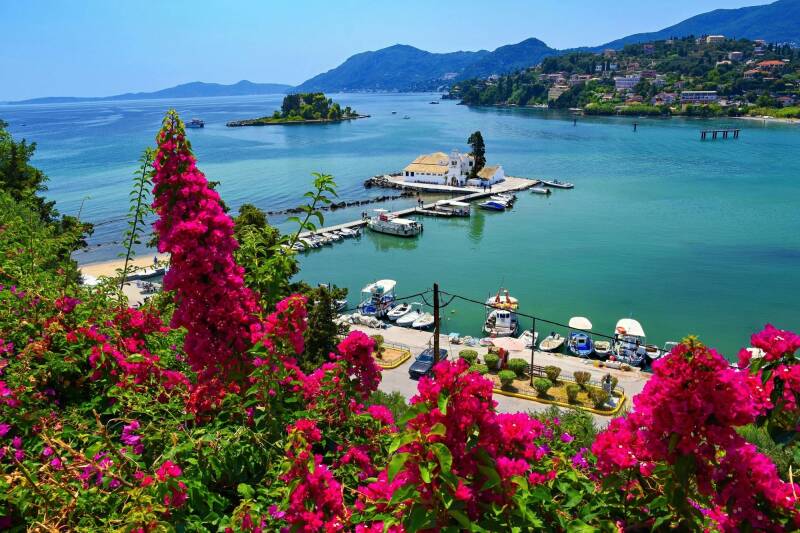
PONTIKONISSI
Discover the Magic of Pontikonisi
Pontikonisi is one of the hidden gems of Greece, a small island located near Corfu that enchants visitors from all over the world with its timeless beauty. Its name, which means "Island of the Mouse", comes from its unique shape, which, when seen from above, resembles a mouse's tail. Pontikonisi is famous for its serene atmosphere and the iconic Byzantine Church of Pantokrator, a historic building dating back to the 12th century, nestled among the lush trees that cover the island. This place is ideal for nature lovers, culture lovers and those looking for a moment of tranquility away from the chaos of everyday life. A visit to Pontikonisi will offer you a unique experience, combining history and spirituality. The photo was taken from KANONI, a panoramic point above the international airport 5 km from the city. You can reach Pontikonisi by going down the steps from Kanoni or by car to the parking lot near the monastery, from where the boats to the island depart.

PALACE OF SAINT MICHAEL AND GEORGE, KNOWN AS THE ROYAL PALACE.
It closes the northern part of Corfu Square (SPIANADA).
The palace was built during the British protectorate of the Ionian Islands, and was commissioned during the reign of High Commissioner Thomas Maitland to serve as the residence of the High Commissioner and seat of the Ionian Senate.
After the union of the Ionian Islands with the Kingdom of Greece in 1864, the palace served as a royal residence, which was used occasionally until 1967.
Inside, you can see:
Historical Halls: The central hall with frescoes of the Odyssey, the circular dance hall, the throne and banquet halls, with original furniture,
Museum of Asian Art: An important collection with over 10,000 works from India, China, Korea and Japan
Gallery: Displays works of art and hosts temporary exhibitions.
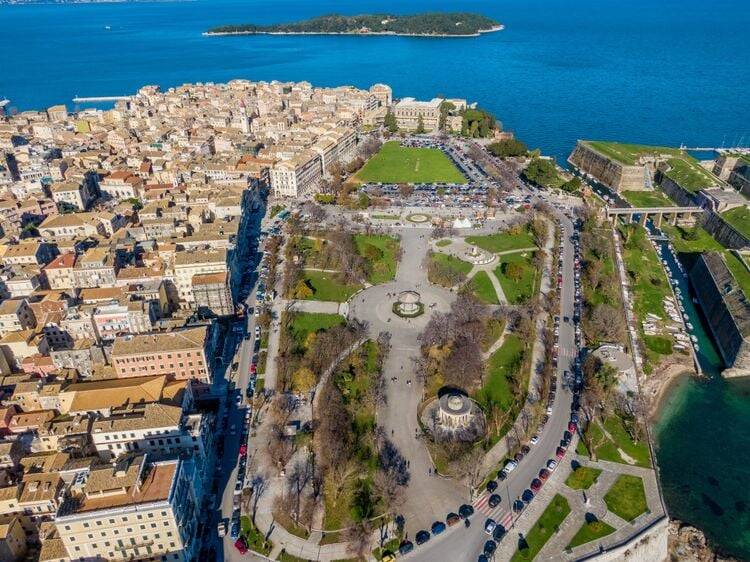
SPIANADA, ONE OF THE LARGEST SQUARES IN EUROPE, APPROXIMATELY 84,000 SQM
Designed as an open space for defensive purposes by the Venetians, it is now divided by a road into two parts (pedestrian streets).
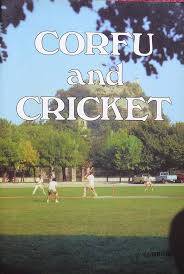
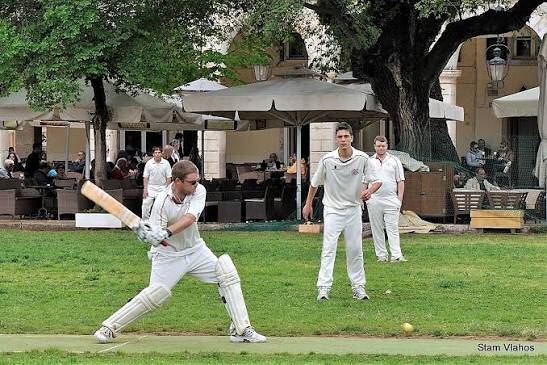
The upper part (the upper square corresponding to the southern part of the spianada) includes the monument built in honor of the British governor Maitland (called Sterna by the Corfiots because it was built on a Venetian reservoir), the palko where the three city bands often play during the summer (classical or modern music) and the monument commemorating the union of the Ionian Islands with Greece in 1864. The lower part (the lower square of the spianada) features a green field where the cricket championship between the Corfu and British teams is held, as well as other events.
To the south of the square is the statue of the first governor of Greece John Kapodistria, who was born in Corfu, while to the north of the square is the royal palace.
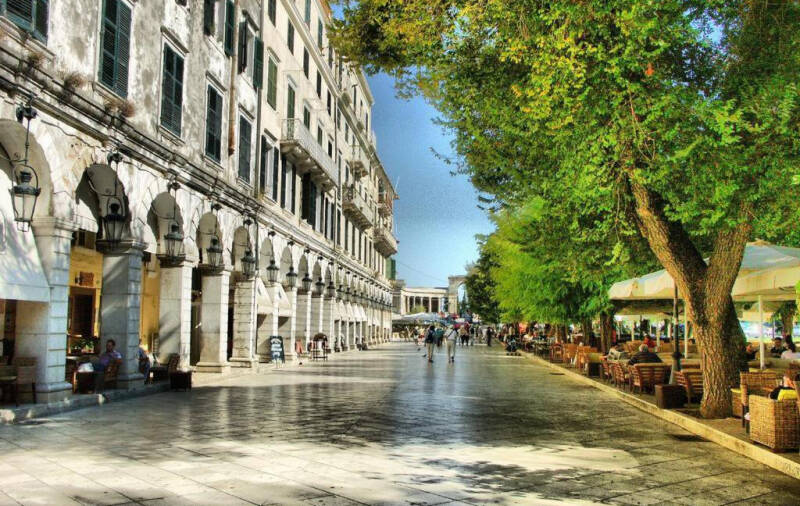
LISTON:
This is a series of arcaded buildings begun by the French during their rule (1807-1814), inspired by the Rue de Rivoli in Paris, and completed by the British during their protectorate (1815-1864).
It is the heart of the daily and nightlife of the old town (pedestrian street) and is frequented not only by tourists but also by Corfiots who come here for coffee and to meet friends. It offers a range of characteristic places to eat and cafes for relaxing aperitifs - in a beautiful setting.
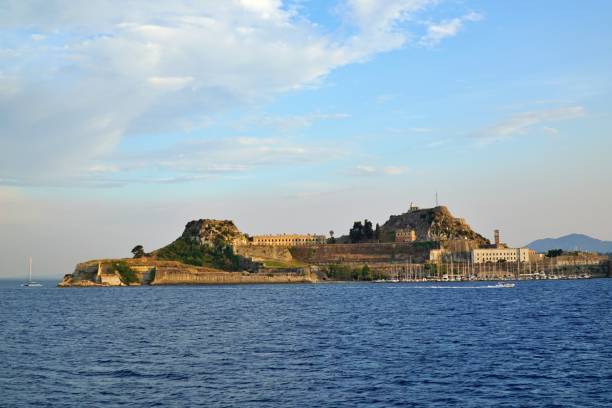
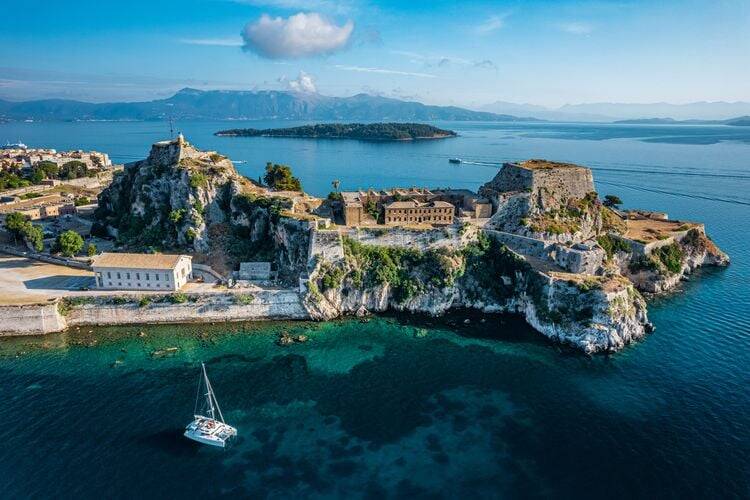
OLD FORTRESS
When the old town of Corfu (Palaeopolis), located on the Kanoni peninsula, was destroyed by invaders in the 6th century, the survivors decided not to rebuild on the ruins, but to use them to create a new city in a more easily defended area.
The city was later protected by the construction of a fortress around it, the Old Fortress, which occupies the entire islet at the eastern end of Corfu town. The Old Fortress features imposing ramparts, a true masterpiece of military architecture from antiquity.
The project begun by the Byzantines was followed by modifications in the 16th century by the Venetians to defend against Turkish invasions. The statue in honor of General Sullenburg (erected by the Venetians to commemorate the defense against the Turks) precedes the entrance to the bridge over the first moat, which, together with the second, leads to the inner courtyard of the fortress.
On the south side of the hill is a small Doric chapel of St. George, built in 1840 by the British as a church for the British detachment. Twenty years later, it was converted into a Catholic church and adorned with icons from the church of St. Spyridon in the old town of Corfu.
Inside the fortress there are many buildings, such as a prison built in 1786 by the Venetians and later expanded by the British, the military chapel of the "Madonna dei Carmini", two barracks built by the British around 1850 and a military hospital that now functions as a music school.
Inside the fortress, near the main gate, there is now a historical archive, which collects more than six centuries of history with a wide variety of documents, and an exhibition space that houses the Byzantine Collection of Corfu, which includes mosaics from the Basilica of Palaiopolis, sculptures, icons and frescoes from the Byzantine period.
Beyond its historical and cultural interest, what makes the Old Fortress special is undoubtedly the magnificent view that opens from here over the city of Corfu and the expanse of sea that separates the island of Corfu from the nearby mainland. On the north side is the Corfu Sailing Club with an adjacent restaurant, open to all.
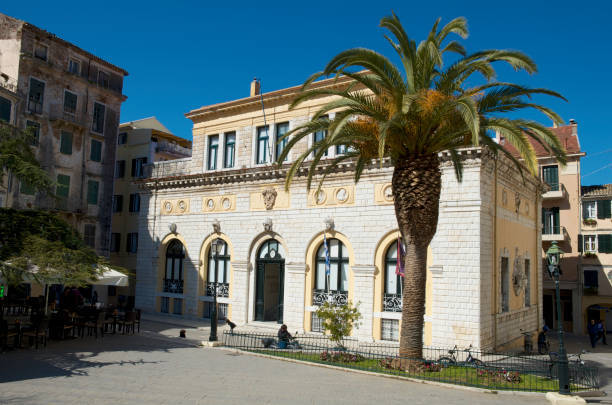

SAN GIACOMO BUILDING
The Nobile Teatro di San Giacomo takes its name from the Catholic cathedral located in the same square. Founded during the Venetian Republic in 1693 as a gathering place for the Venetian aristocracy, it was converted into a theater in 1720 and became the first modern theater to be founded in Greece. Initially, the theatre staged plays, but in 1733, an opera premiered there. The opera was Gerone, tyrant of Syracuse by A. Aurelli. Operas were performed continuously, especially between 1771 and 1892, when the theatre was converted into a town hall,
The musical tradition established by the theatre is particularly important for the history of modern Greek music, as it helped establish a Greek musical presence at a time when the Greek state did not even exist. The theatre staged the genre of comic opera known as opera buffa, which was less elaborate and therefore cheaper than true opera seria. The musicians of the San Giacomo opera came mainly from southern Italy.
The theatre attracted many Italian professional musicians who came to Corfu as teachers, composers and performers. This fostered an appreciation for music among the island's inhabitants, gradually leading to the emergence of the first Corfiot musicians, who, in turn, became the first professional musicians in modern Greece
According to oral tradition, opera actors who achieved success in the theatre were distinguished by the famous applaudito a Corfu ("applauded in Corfu"), a tribute to the island's demanding musical tastes.
The theatre was later replaced by the Municipal Theatre of Corfu in 1902, with architecture reminiscent of La Scala in Milan. The Municipal Theatre and its historical archives, many of which belonged to the Teatro San Giacomo, were destroyed during a Luftwaffe bombing in 1943
SOME FOTO OF CORFU TOWN
BANKNOTE MUSEUM

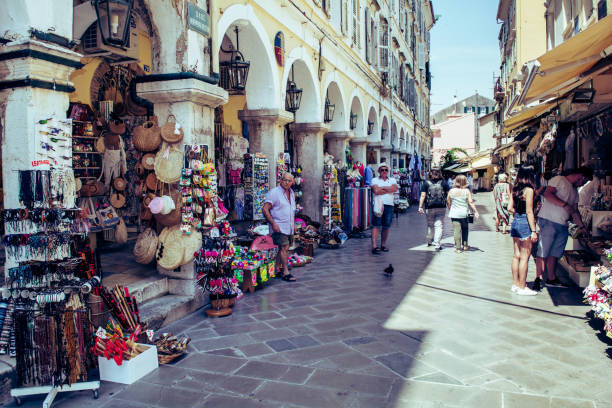


IMAGES OF THE CORFU CARNIVAL


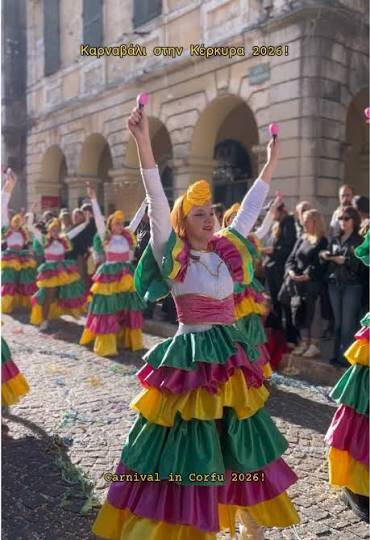
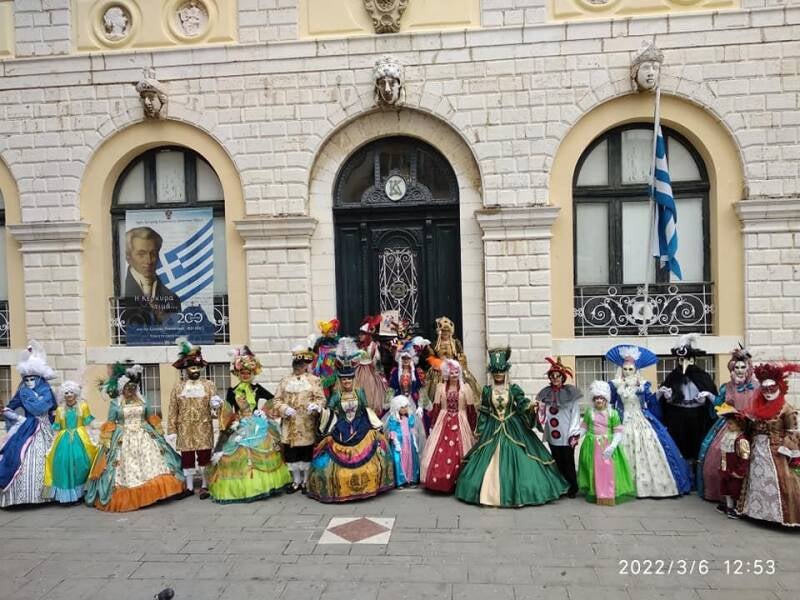
CORFU CARNIVAL PROGRAM 2026
Here are the unmissable events during the Carnival of Kerkyra, the island's capital:
Sunday, February 8th: Rehearsal of the float parade
Thursday, February 12th: In the streets of the old town, you can admire the "Petegoletsia," an ancient ritual. Outside on the balconies of their homes, women gossip among themselves (hence the name). The subjects of their chatter will be politicians, public figures, and even... their neighbors' laundry! All of this is performed in the traditional Corfiot language, which is sometimes satirical, embarrassing, and bordering on vulgar.
All of this is accompanied by music and folk songs.
Sunday, the 15th: "Sir Carnival" parade. You can admire mas and costumed characters who impersonate all the characters parading through the city center. The procession closes with Sir Carniva's evils and misfortunes of the past year, whose fate is already sealed: the bonfire! Celebratory songs and dances will follow.
(PROGRAM TO BE CHECKED)
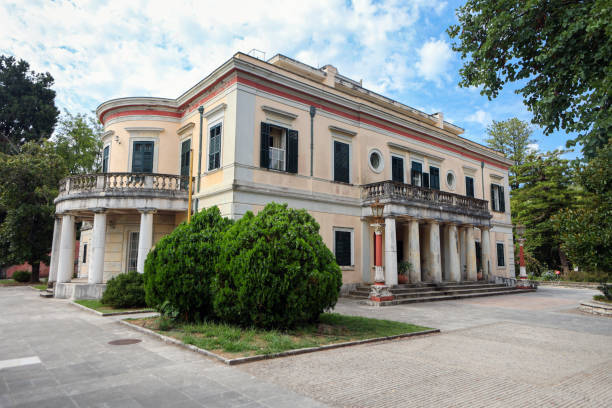
MON REPO VILLA
Built by Frederick Adam, British Governor of the Ionian Islands, it became a royal residence in 1864, the year of the union of the Ionian Islands with Greece. King George I of Greece named it "Mon Repo" meaning "My Rest". The royal family regularly visited it during the summer and several descendants of the royal family were born there: Prince George in 1869, Princess Alexandra in 1870, Prince Philip, later Duke of Edinburgh and husband of Elizabeth II, in 1921, and Princess Alexia, eldest daughter of King Constantine II, in 1965. Princess Maria of Greece and Grand Duke George Mikhailovich Romanov were also married at Mon Repos in 1900.
It now functions as a museum housing archaeological finds from the Ionian Islands, while in the summer months, musical and theatrical performances are held in the garden.
__________________________________________________________________________________________________________________________________________________
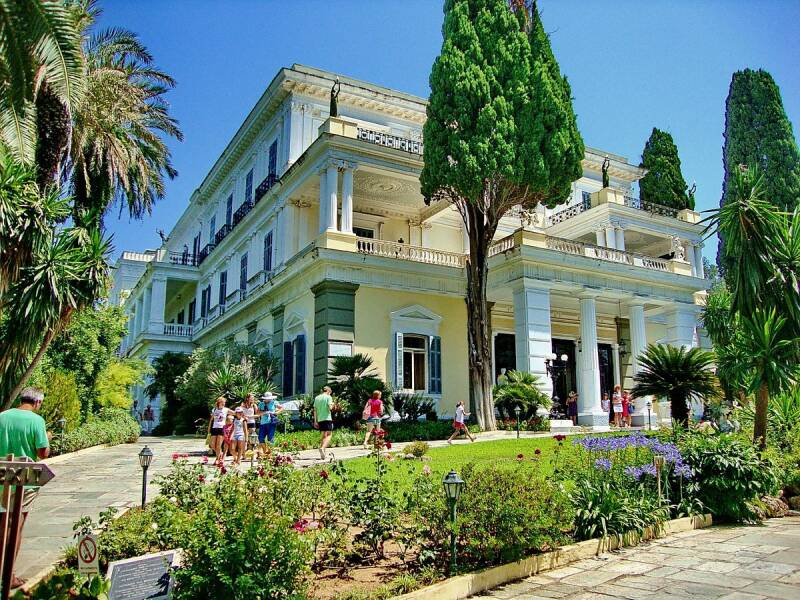

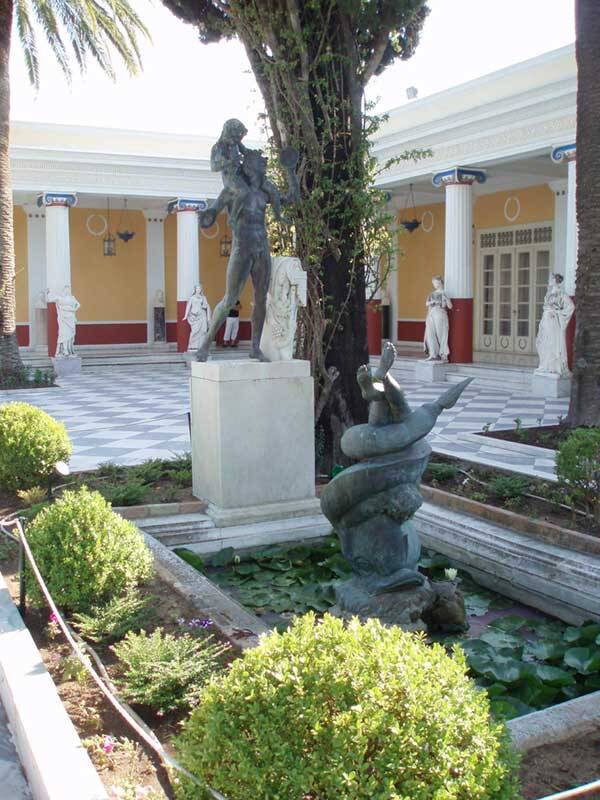

ACHILLION
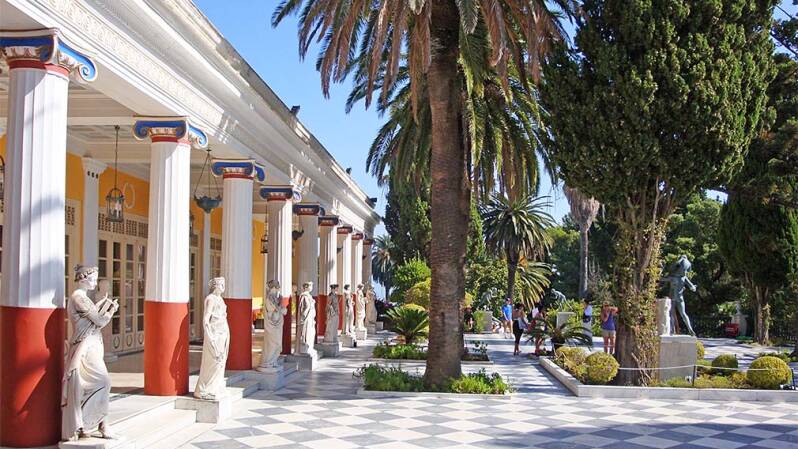
The Achilleon is a palace built by Empress Elisabeth of Austria, also known as Sissi, about ten kilometers south of Corfu Town. It was Elisabeth's favorite vacation spot, and she built the palace herself because she admired Greece, its language and its culture. The location of the Achilleon offers panoramic views of Corfu Town to the north and the entire southern part of the island. The palace was designed by the Neapolitan architect Raffaele Carito and has as its central theme the figure of the mythological hero Achilles. Wilhelm II of Germany purchased it from the heirs of the Empress, visiting it every spring until 1914 and participating in archaeological excavations in the area.
Today, the residence occasionally hosts European summits, such as the signing of the Treaty of Corfu in 1994, but is mainly used as a museum.
In 1981, the casino scene from the twelfth James Bond film, "For Your Eyes Only," was filmed there.
THE MOST FAMOUS GREEK EASTER



THE MOST FAMOUS EASTER IN GREECE
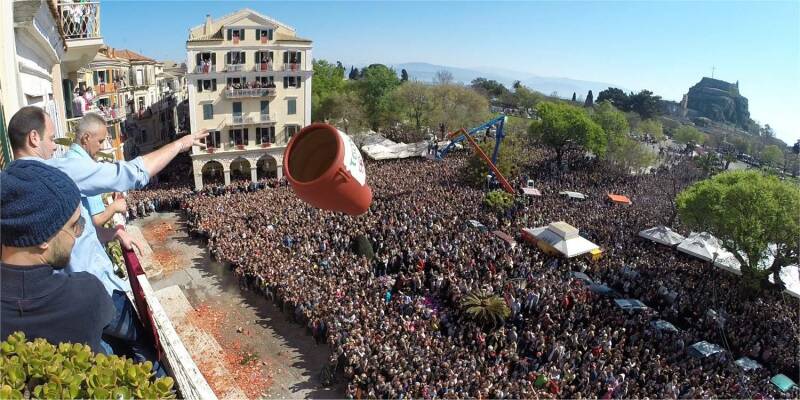
Easter in Corfu is a spectacular and unique event, a blend of local traditions, characterized by evocative processions (especially on Good Friday with the Epitaphs and Holy Saturday), philharmonic bands playing joyful and mournful marches, and the traditional throwing of clay pots from balconies.
Good Friday: Epitaph processions throughout the island, accompanied by philharmonic bands and choirs, with lanterns that paint the city purple. Each church holds its own Epitaph procession. The most important is that of the main church (Metropolis), which takes place in the evening at 22:00
Holy Saturday (Morning): Litany of Saint Spyridon along with the Epitaph of the church of Saint Spyridon at 9:00 am, with philharmonic bands playing mourning marches, beloved by the population. At 11:00 am, the so-called first resurrection begins with the famous throwing of the botides, red clay jars thrown from the balconies and philharmonic bands playing festive music in the streets of the city.
Holy Saturday (Midnight): The Resurrection is celebrated in the churches, with the transition of the "holy light". The upper part of the wide Spianada is filled with thousands of people who, at midnight, become part of a moving, festive scene: on the platform, the bishop and the other priests begin to chant about the Resurrection of Jesus, people light candles and exchange greetings, bands start joyful parades and fireworks are launched from the old fortress.
MUSICAL TRADITION

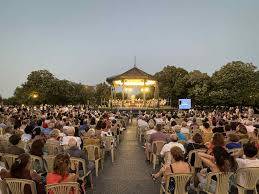
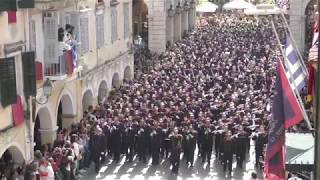
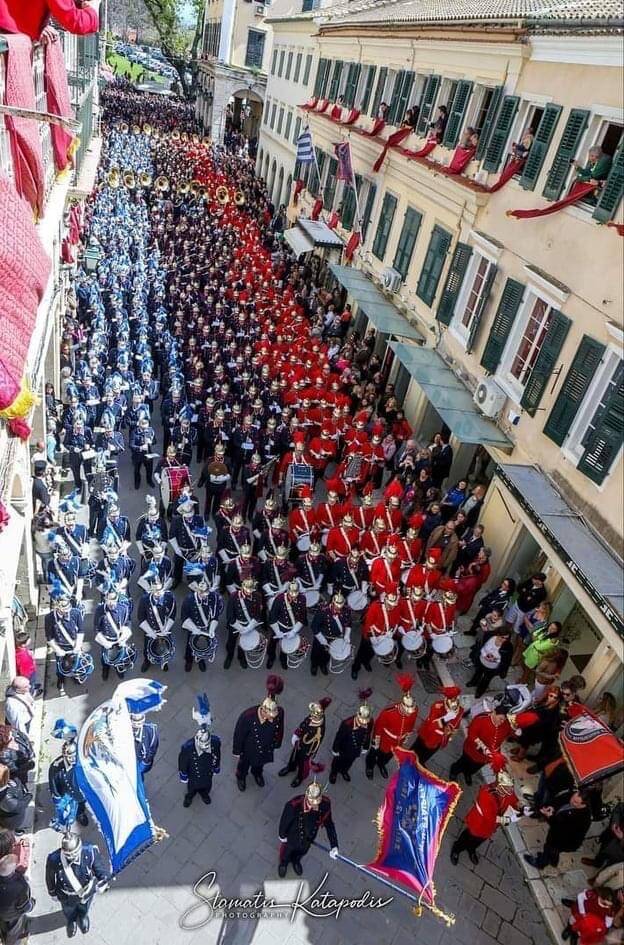
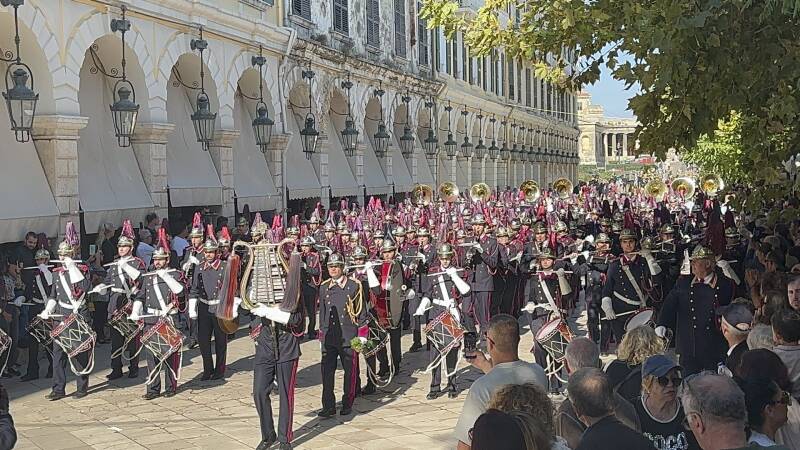
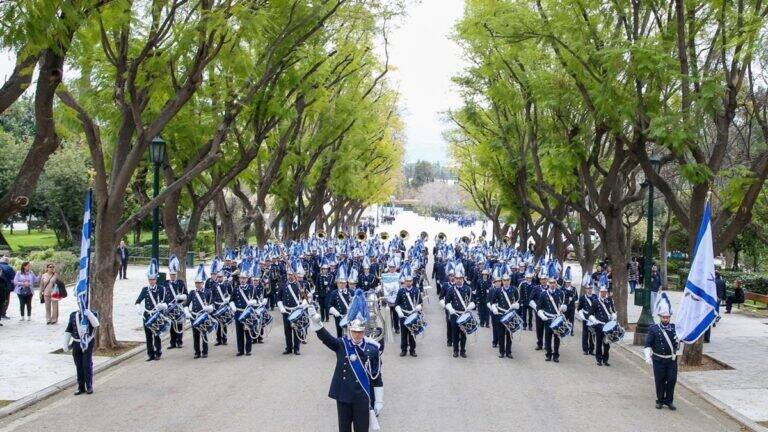

The Philharmonic Societies of Corfu are historic bands and key cultural institutions on the island. They were founded in 1840 as the first music academy in Greece and today number 17, promoting free music education and participating in local events. Famous names include the "Philharmonic Society of Corfu" (Old Philharmonic) the first founded in 1840, the "Mantzaros" (1890) and the "Kapodistrias" (1980).
They are deeply rooted in the local tradition, playing in festivals and processions and have been registered as Intangible Cultural Heritage.
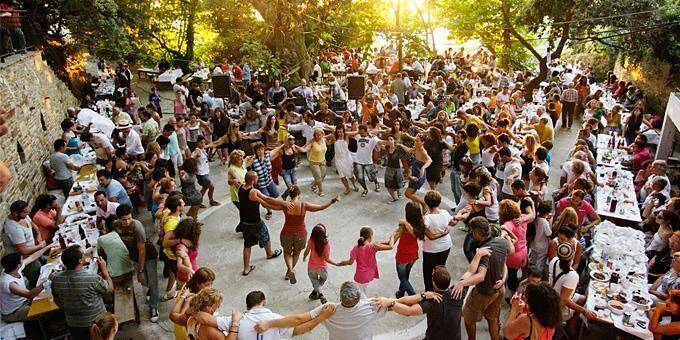
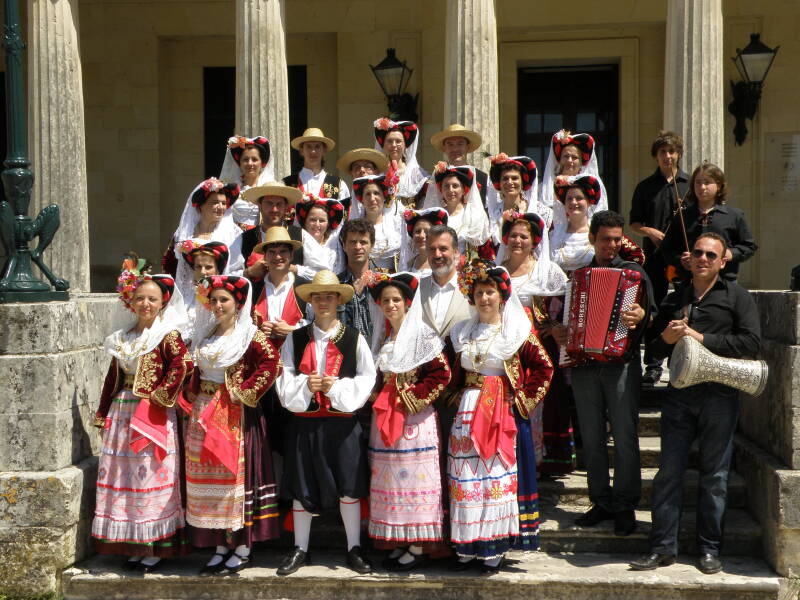
PANIGIRI: POPULAR FESTIVAL WHERE, IN ADDITION TO EATING SPIT-ROASTED MEAT, EVERYONE GETS INVOLVED IN TRADITIONAL DANCES, INCLUDING TURISTS
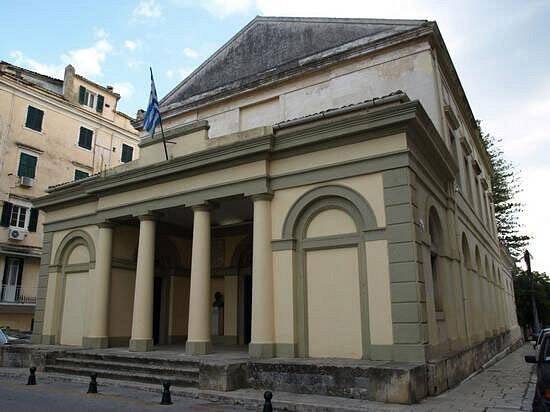
IONIAN
PARLIAMENT
TOMBS OF MENECRATES

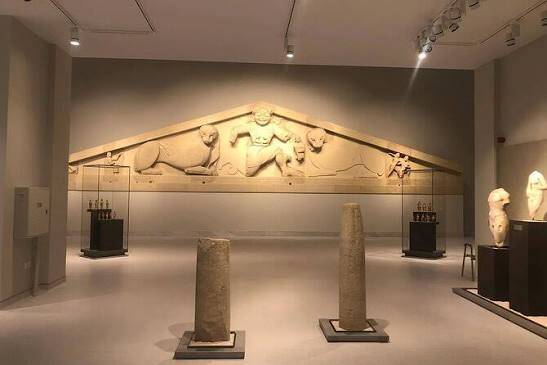
ARCHAEOLOGICAL MUSEUM

SOME BEACHES OF CORFU
PORTO TIMONI
(NORD OVEST, NEAR SAINT GEORGE PAGHI)
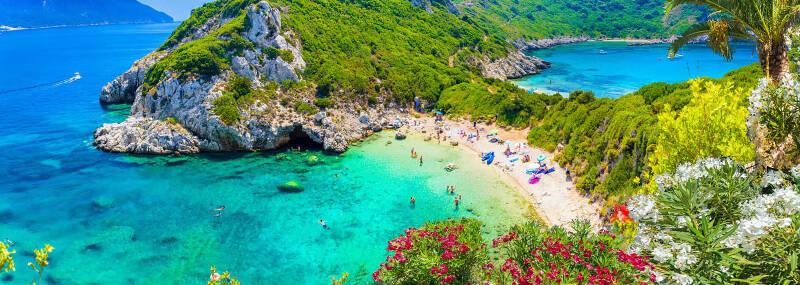
SIDARI
(NORD)
SIDARI
BARBATI (CENTER EST)


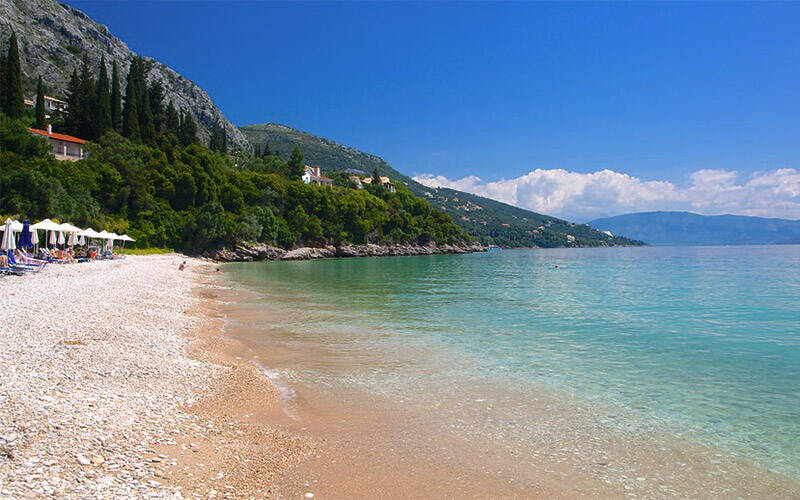
SAINT GEORGE PAGHI
(NORD-OVEST)
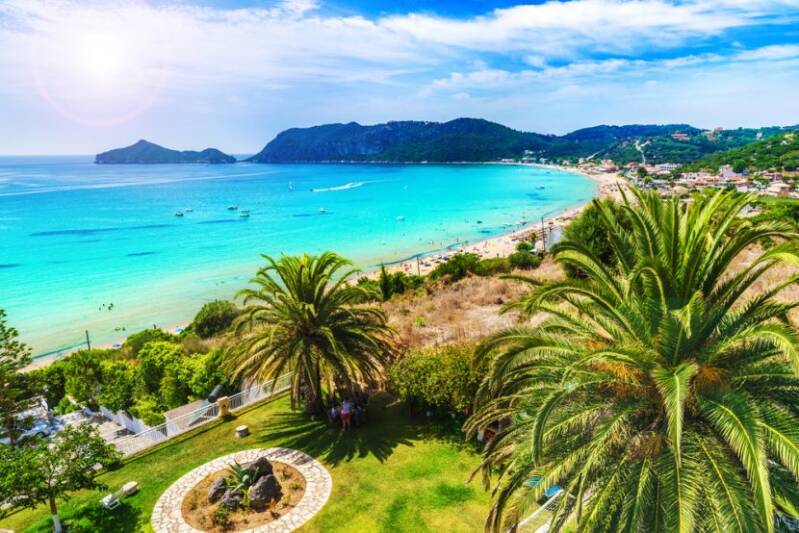
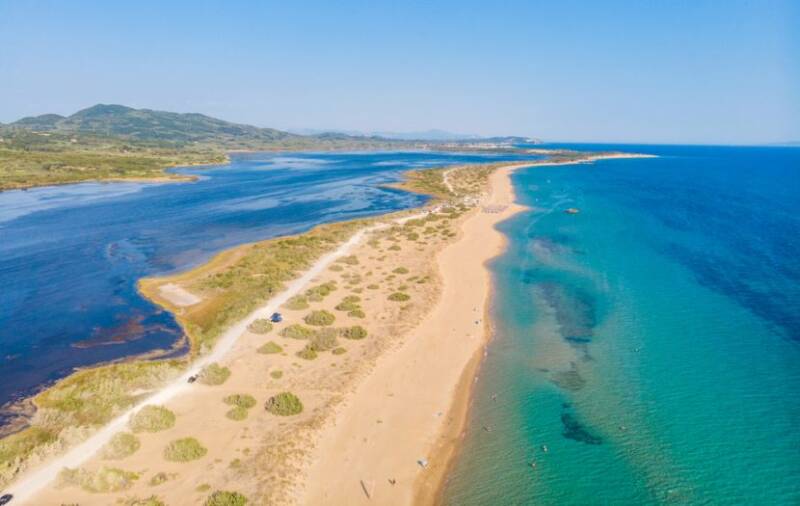
XALIKOUNAS
SUD-OVEST
NISSAKI
NORD EST
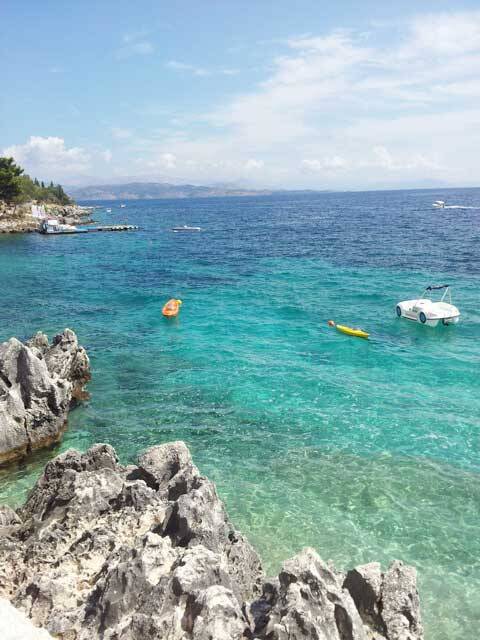
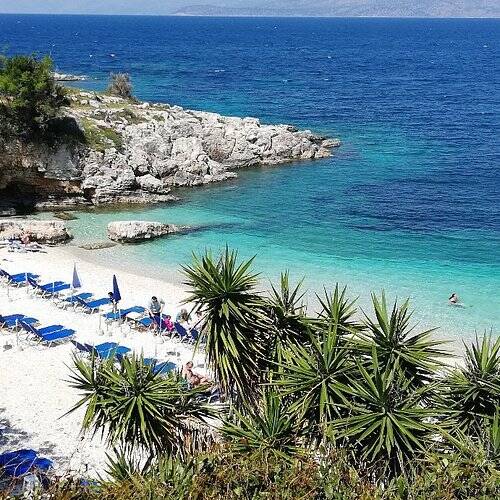
KASSIOPI
NORD, LATO EST
PALEOKASTRITSA
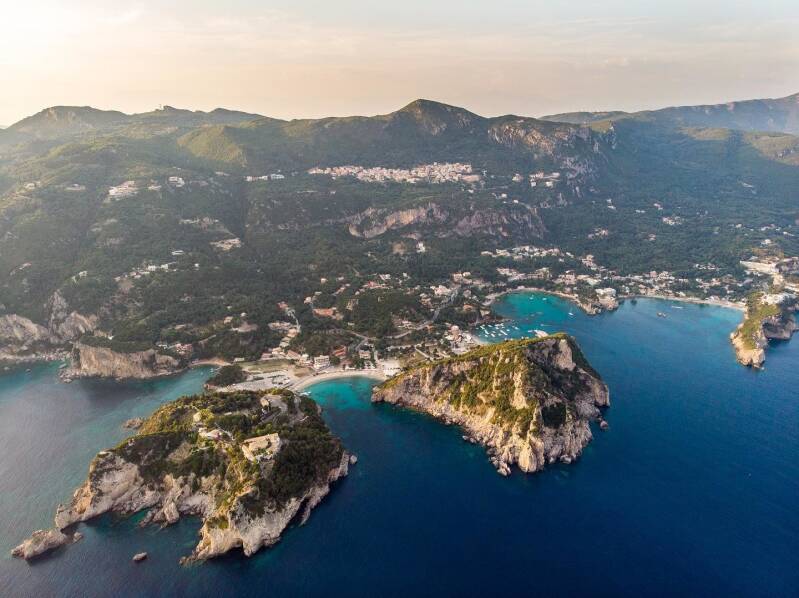
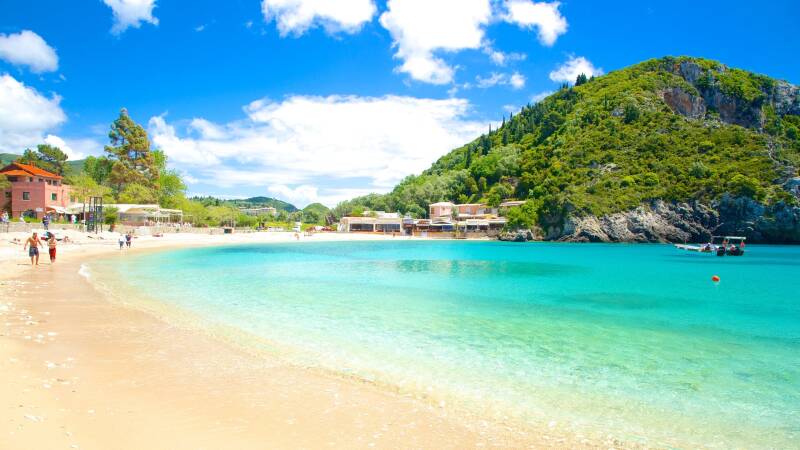
PALEOKASTRITSA
GLYFADA
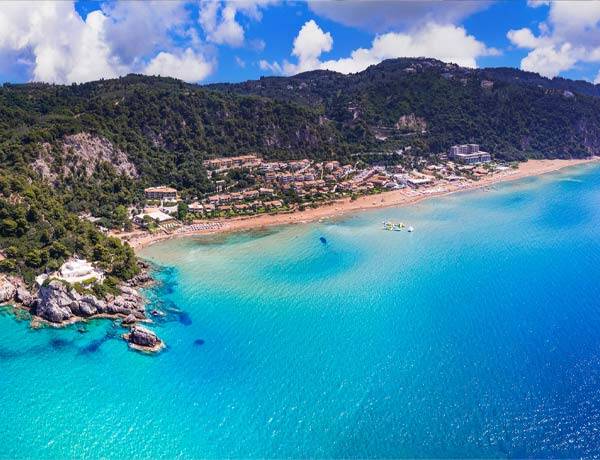
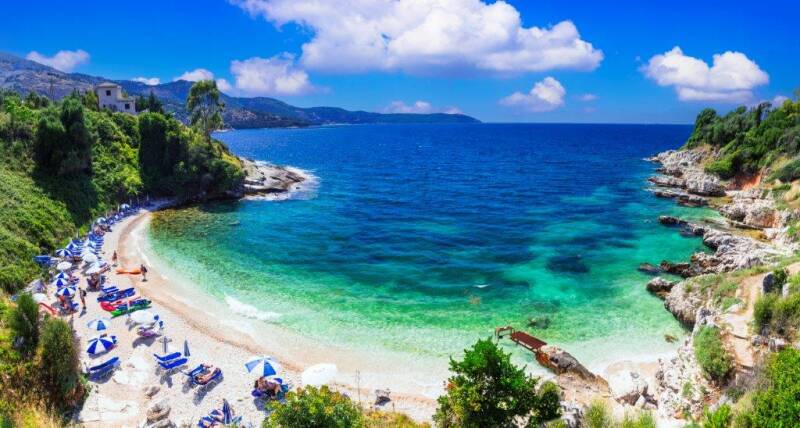
KASSIOPI
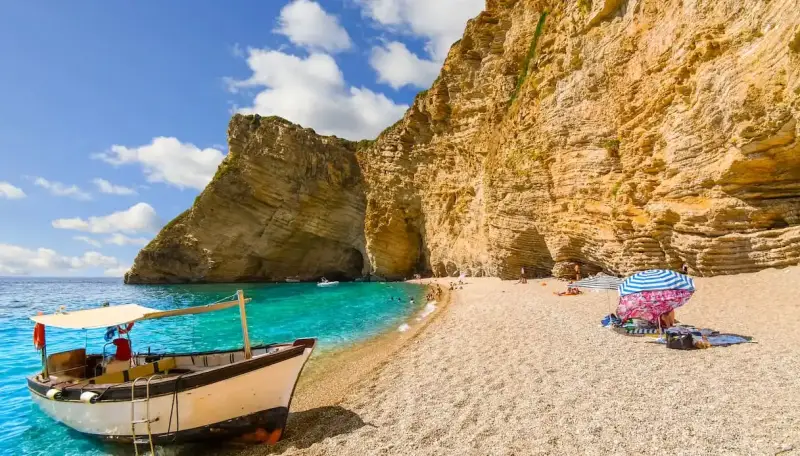
PARADISE BEACHE, OVEST, ONLY BY BOAT.
SOME USEFUL INFORMATION FOR CORFU
(HIGHLIGHTED – NOT TO BE MISSED)
WHAT TO SEE IN THE CITY:
- SPIANADA (This is Corfu’s main square, just a few meters from the house. When you step out onto the square from my place, go about 20 meters to the right to the Cavalieri Hotel—near the Ionian Academy—and head up to the hotel bar terrace; it offers a panoramic view and is recommended both during the day and in the evening.)
- LISTON (This is the lower section of the square—a perfect area for strolling and relaxing.)
- ROYAL PALACE AND ITS SMALL GARDEN (A royal residence until 1968. You need a ticket to enter the interior, which houses a Museum of Asian Art, whereas the garden is free to enter.)
- OLD FORTRESS (Requires an entrance ticket; inside, there is a bar with a panoramic view and a sailing club with an attached restaurant that is open to the public—highly recommended for its location. Those dining at the restaurant may not have to pay the fortress entrance fee.)
- A STROLL THROUGH THE CITY STREETS (To admire its distinctive urban layout.)
- TOWN HALL SQUARE
- CASA PARLANTE: is a small private museum where the aristocratic corfiota house of 2 centuries ago is presented.
- S. SPIRIDIONE CHURCH (protector of the island).
OUTSIDE THE CITY:
- KANONI / PONTIKONISSI (5 km from the city; located above the airport.) - KANONI (named after a cannon located there) is the area featuring bars with panoramic views, while PONTIKONISSI (an islet shaped like a mouse—if you use a little imagination) is the small island visible from Kanoni.
- MON REPO (located on the road to Kanoni; a former royal summer residence featuring a museum. This is the birthplace of the consort of Queen Elizabeth of England).
- ANEMOMILOS = Windmill (located at the end of the city bay in the Garitsa suburb, featuring a reconstructed windmill; offers a view across the entire bay towards the fortress).
- ACHILLEION (located in Gastouri; a palace built and used as a residence by Empress Elisabeth of Austria—known as Sisi—featuring panoramic gardens; an entrance ticket is required for the palace and gardens).
SOME FAMOUS BEACHES:
- PALEOKASTRITSA AND SURROUNDINGS (West; the monastery—worth a visit—is located on the hill);
- LAKONES, a village offering a panoramic view over the entire Paleokastritsa area;
- SIDARI (North; about a 1-hour drive via the island's inland road, or 1.5 hours if you prefer to go via Kassiopi—a popular tourist spot—taking the coastal road along the east side);
- SAN GIORGIO PAGHI (West; Agios Georgios Pagon; about a 1-hour drive; please take care on the final stretch of the road; a beautiful beach where you can also rent a boat to visit the beach opposite, known as Porto Timoni);
- BARBATI (East)
- KALAMI (East)
- KASSIOPI (Northeast) Given the limited time available for a holiday, I have listed the most significant and iconic beaches, though there are many others to suit every taste.
DINING:
If you prefer to have breakfast at the house, there are two supermarkets nearby (about 100 meters away), while in your room you will find Nespresso coffee, tea, and sugar. I recommend buying yogurt from Alexis’s dairy shop (located near Vrachlioti Square, close to the San Giacomo Town Hall; it is well-known and highly regarded, and easy to find by asking around). It is the only place to find artisanal yogurt—which tastes quite different from the mass-produced kind found in supermarkets—and it can be enjoyed plain or with sugar or honey. They also prepare two types of custard creams and *bougatsa* (a pastry made with phyllo dough, a creamy filling, and syrup). Alexis is also famous for artisanal butter production; Corfu butter is considered the finest in Greece. Additionally, in the morning, they sell a soft bread roll filled with butter and honey—a calorie bomb, but delicious.
If, however, you prefer to have breakfast at a café (there are many, both on the Esplanade and in the surrounding area), I recommend two spots near the apartments for the variety of sweet and savory items they offer. The closest one is found by exiting the building, turning right, and then turning right again onto Gilford Street, heading towards Town Hall Square (about a 5-minute walk). This café, which has a few outdoor tables, is called Starenio Bakery.
The other bakery—which also functions as a café—is located on Rizospaston Street near Attica Bank (it takes twice as long to walk there compared to the first one, but I consider that it is better). I’ve mentioned it because, if you have parked your car nearby (finding parking in Corfu is difficult), you might want to take advantage of the location.
At these bakeries or cafés, you can also buy *pitas* (savory pastries) to enjoy as a snack later in the day. They are made with phyllo dough and named according to their filling: *tiropita* (contains feta cheese), *spanakopita* (spinach-based), *spanakotiropita* (spinach and feta), *lukanopita* (with sausage), etc.
Among the various restaurants in the city center, I would highlight: Ninos (on Sevastianou Street, near Vrachlioti Square), Souvlaki Mamma on Alexandra Avenue (Leoforos Alexandras), TO KOKORIA on Kalocheretou st and the Pergola restaurant on Aghias Sofias Street. Near the New Port, I recommend the restaurant Hayati (ΧΑΓΙΑΤΙ) on Andrea Kalvou Street; however, there are other recommended spots in the Garitsa pine grove area, extending as far as Anemomylos.
Another distinctive spot is "Faliraki," located below the Royal Palace; it offers a lovely view of the area and the option to dine at the café-restaurant. I recommend ordering the meat or fish platters (*pikilia*—a variety assortment). Other restaurants (though not all) also offer these platters, particularly the meat versions.
National dishes: Lamb and kid goat.
SOME CHARACTERISTIC DISHES: 1) MOUSSAKA (BAKED DISH WITH POTATOES, EGGPLANT, MEAT SAUCE, AND A BÉCHAMEL-STYLE CREAM),
2) GREEK SALAD (CHORIATIKI SALATA),
3) ROAST OR SPIT-ROASTED LAMB OR KID GOAT,
4) KONTOSOUVLI (VARIOUS PIECES OF MEAT ON A SPIT),
5) MEATBALLS (VERY GOOD, THOUGH NOT ALWAYS EASY TO FIND ON THE MENU),
6) PASTICCIO (BAKED MACARONI WITH MEAT SAUCE AND CREAM),
7) VARIOUS VEGETABLES COOKED IN OIL (LADERA),
8) SKEWERS (SIMILAR TO ITALIAN *ARROSTICINI* BUT LARGER AND MORE FLAVORFUL),
9) TZATZIKI (SAUCE MADE FROM GARLIC, CUCUMBER, AND YOGURT, SERVED WITH FISH OR MEAT),
10) GEMISTA (PEPPERS OR TOMATOES STUFFED WITH RICE, MEAT, AND SPICES),
11) DOLMADAKIA (RICE AND GROUND MEAT WRAPPED IN VINE LEAVES),
12) SAGANAKI (FRIED CHEESE),
13) KOLOKITHOKEFTEDES (ZUCCHINI FRITTERS),
14) MELITZANOSALATA (EGGPLANT-BASED SIDE DISH),
15) TARAMOSALATA (SIDE DISH MADE FROM COD ROE),
16) KLEFTIKO (LAMB COOKED IN FOIL),
17) GYROS: AVAILABLE AS A PLATED PORTION, BUT IT IS PREFERABLE TO ORDER IT WRAPPED IN A CONE; In Corfu, they also add a red sauce. It is called *gyros* because it is made from slices of meat on a vertical spit that rotates while cooking. It is known as *pita gyros*, but you can also order it with a meat skewer (*pita me souvlaki*) or with *kebab*—minced lamb or beef with spices, cooked over hot coals (*pita kebab*); there is also a vegetarian version made with feta cheese instead of meat. You can try *pita gyros* at restaurants like Ninos and Mamma Souvlaki, as well as at other spots that specialize exclusively in *pita* dishes.
CORFIOT CUISINE:
THE MOST FAMOUS DISHES ARE: BURDETO (FISH IN A THICK PAPRIKA SAUCE), BIANCO (FISH IN A WHITE SAUCE WITHOUT TOMATO), PASTICIADA (MACARONI WITH A SPICED SAUCE AND ROOSTER OR BEEF), SOFRITO (BEEF IN A SPICED SAUCE), TSIGARELIA (CORFIOT WILD GREENS SERVED AS A SIDE DISH).
DESSERTS:
- BAKLAVAS (PHYLLO PASTRY WITH NUTS AND SYRUP)
- KATAIFI (KATAIFI PASTRY WITH NUTS AND SYRUP)
- KURABIEDES (A TRADITIONAL CHRISTMAS TREAT, THOUGH AVAILABLE YEAR-ROUND)
- HALVAS (SESAME-BASED PASTE; COMES WITH ALMONDS, COCOA, POMEGRANATE, PISTACHIO, OR OTHER COMBINATIONS, AND IS AVAILABLE IN BOTH SPREADABLE AND SLICABLE FORMS. AN EXCELLENT GIFT IDEA. IN MY OPINION, THE BEST VARIETY COMES FROM GREEK MACEDONIA: MAKEDONIKOS HALVAS)
- SPOON SWEETS: VARIOUS FRUIT-BASED (AND OTHER) DESSERTS PRESERVED IN SYRUP, MAKING THEM VERY SWEET.
TYPICAL CORFIOT PRODUCTS:
- KUMQUAT: A SMALL CITRUS FRUIT (CHINESE MANDARIN). IT IS USED TO MAKE LIQUEUR (VERY SWEET) AND OTHER SPECIALTIES.
- NOUBOULO (CURED MEAT: SMOKED PORK LOIN),
- TSITSIBIRA: A REFRESHING DRINK MADE FROM SUGAR, LEMON, AND GINGER, WITH NO PRESERVATIVES OR ADDITIVES. THE BOTTLE MUST BE OPENED VERY SLOWLY; OTHERWISE, IT WILL FOAM OVER AND SPILL OUT, ESPECIALLY IF SHAKEN BEFOREHAND. There are two factories that produce it; there are slight differences between them, but both are excellent.
- Mandoles: an almond confection with caramelized sugar.
- Corfu craft beer (5 varieties available). It contains no preservatives and, unlike other beers, must be kept refrigerated.
- Olive oil.
- Honey and wine.
- Olive wood crafts.
I recommend checking if any traditional festivals known as *panigiri* (πανηγύρι) are taking place during your stay; they are well worth attending (you will be drawn into the dancing—no prior dance skills needed), and you can enjoy spit-roasted lamb or *souvlakia*.
Additional information: From the airport, take bus no. 15 to San Rocco Square (Saroko), then walk to Zaloggu Street (about 10 minutes), or take a taxi from the airport (approx. €10.00). The distance between the airport and the house is about a 30-minute walk (approx. 3 km).
Guide selfguided.gr: for tourist information.

0. APARTMENT LOCATION
1. SPIANADA
2. HOTEL KAVALIERI
3. LISTON
4. ROYAL PALACE
5. OLD FORTRESS
6. IONIAN PARLIAMENT
7. BANKNOTES MUSEUM
8. STARENIO BAKERY
9. IL FRESCO BAKERY
10. ALEXIS DAIRY
11. FALIRAKI
12. NINOS RESTAURANT
13.PERGOLA RESTAURANT
14. MAMMA SOUVLAKI RESTAURANT
15. TA KOKORIA RESTAURANT
16. CASA PARLANTE
17. CENTRAL MARKET
A BRIEF HISTORY OF CORFU
Mythology:
Apollonius of Rhodes, in his *Argonautica*, recounts that the island of Corfu served as a stopping point for Jason and the Argonauts during their quest for the Golden Fleece. The island also appears in Homer’s *Odyssey* under the name Scheria—home to the legendary Phaeacians, who arrived there in magical ships from the distant lands of the Cyclopes.
According to legend, Odysseus sought refuge on the shores of Scheria, then ruled by the Phaeacians. There, he met and was aided by Nausicaa, daughter of King Alcinous; before resuming his voyage home, Odysseus wished to explore and admire the beauty of the Phaeacian island.
Origins:
- Paleolithic and Neolithic periods: Earliest traces of human activity found in the Gardiki cave and settlements at Sidari.
- 730–700 BC: Founding of the colony by the Corinthians under the name Corcyra (Kerkyra). In early 730 BC, the history of Corfu was shaped by the interaction between the local inhabitants and the Corinthians, the latter having settled on the Kanoni peninsula. A period of harmony ensued, bringing prosperity and splendor to the island; during this time, the island minted its own coinage and the colony of Epidamnos was established. Relations between the Corfiots and the Corinthians later deteriorated when they took opposing sides in political conflicts: one group supported the democratic faction, while the other backed the oligarchs. The conflict persisted until after the Peloponnesian War, during which the Corfiots allied themselves with the Athenians (375 BC), subsequently paving the way for their gradual pursuit of independence.
- 6th century BC: Construction of the Temple of Artemis; the island becomes a major naval power.
- 229 BC: The island places itself under Roman protection to escape the Illyrians, marking the beginning of Roman rule in the Ionian Sea.
- From 337 AD: Byzantine rule, with Corfu serving as a strategic naval base. Byzantine control came to an abrupt end in 1081 when the Normans established their authority over Corfu.
In 1149, the Byzantines, aided by the Venetian fleet, succeeded in liberating Corfu from Norman occupation.
- 1215–1266: Under the Despotate (or Lordship) of Epirus.
- 1266–1386: Period of Angevin occupation.
- From 1386: Corfu placed itself under Venetian rule; in return, the Venetians granted significant freedoms regarding religion and education. Venetian hegemony in Corfu lasted for over four centuries (1386–1796); the island was heavily fortified and withstood several Ottoman sieges, while retaining a strong Italian cultural imprint. The administration of Corfu was organized according to the aristocratic model of Venice. The inhabitants were consequently divided into three distinct classes: nobles, *civili* (the professional/middle class), and the common people.
- 1797–1799: First period of French rule, followed by a Russian-Turkish protectorate.
With the drafting of the Treaty of Campo Formio, Napoleon Bonaparte—having defeated the Venetians—established French hegemony over all the Ionian Islands. As a first step, the French burned the *Libro d’Oro* (Golden Book)—the register of the island's nobility—in Corfu’s main square, where they also planted a symbolic "Tree of Liberty." The Russians, having seized the island of Corfu with Turkish assistance, established a treaty in 1800 that recognized the Ionian Islands as a free and autonomous state for the first time. The State of the Ionian Islands—which enjoyed a flourishing period that saw the establishment of a library in Corfu—lasted until 1807, when the French re-established their rule. For several years, the people of Corfu and the French lived side by side; during this time, the island experienced significant growth in its economy and public education, the first Ionian Academy of Sciences and Arts was founded, and printing technology was introduced.
- 1815–1864: British Protectorate (United States of the Ionian Islands) prior to the final union with the Kingdom of Greece in 1864. British rule was perhaps the most prosperous era in Corfu's history, fostering major developments in the economy, public health, and education. The first Greek university was established, the road network was expanded, and a public aqueduct system was constructed. Following its annexation by Greece, the city saw a progressive loss of influence to Athens; however, the rest of the island began to flourish both politically and economically, driven by an expansion of industrial activity.
- 1923: The famous Corfu Incident takes place—a military and diplomatic crisis involving the bombardment and temporary occupation of the island by Italy.